About Me
My name is Yannick Badoux and I'm an enthusiastic and motivated astronomer and data scientist. In the last years of my studies,
I have focused on simulations and data science to solve astronomical problems. I have a broad interest in all topics astronomy,
as long as I can use my data science skills to solve the problem.
I am currently working on my second master's project and final thesis
in which I study the evolution of the orbit of planet-moon pairs after close stellar-encounters. Do they go rogue, do they stay together? Will
it be possible to make predictions about future exo-moon observations? Stay tuned if you want to find out :)
When I'm not working on my research, I like to play sports and video games, and I enjoy going to the movies. I also enjoy cooking and going out to eat at a nice restaurant.
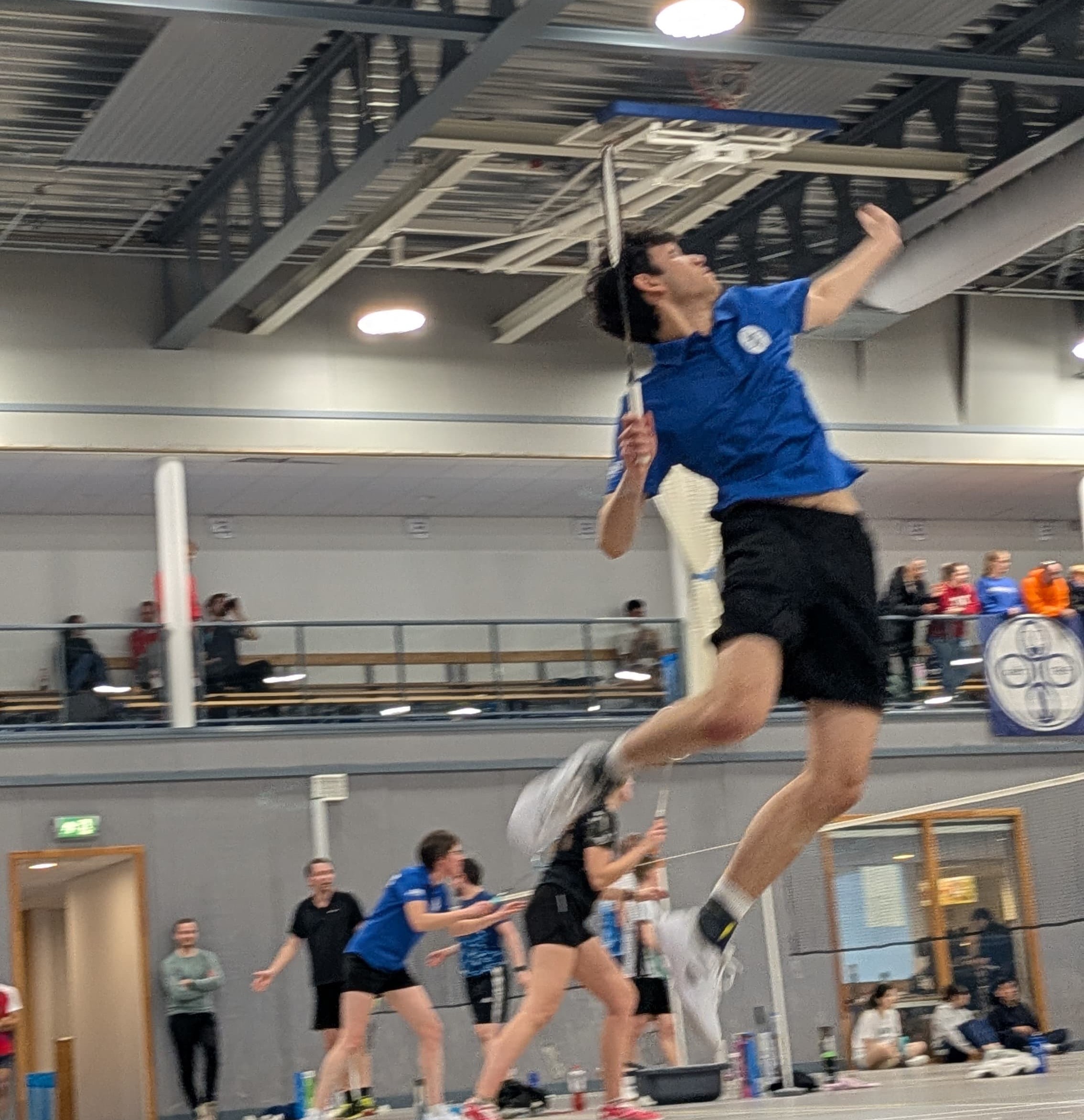
I'm a passionate badminton player and like to play at least two times a week. I am involved with my local badminton club, where I help organize the yearly badminton tournament.
Over the course of my studies, I have assisted in teaching several courses, including Programming Methods in Python, Practical Astronomy and Stars.
Contact
Feel free to reach out to me via email or connect with me on LinkedIn if you have any questions regarding astronomy research!
Email: badoux@strw.leidenuniv.nl
LinkedIn: LinkedIn Profile
Current Research Projects
What happens to a moon when its planet goes rogue?
Master research project at Leiden University. Supervised by Simon Portegies Zwart.
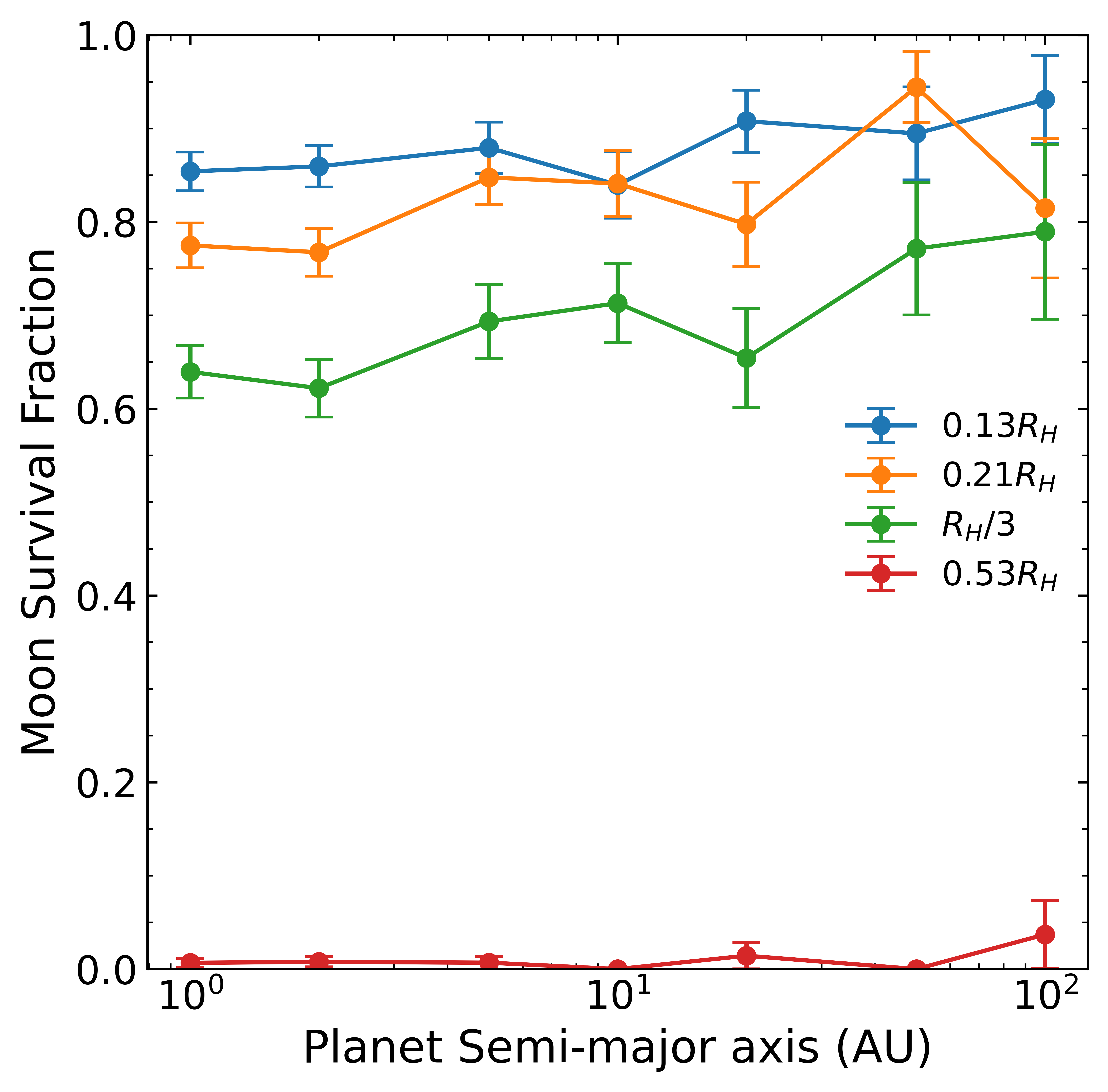
Recent detections of free-floating planets have provided insights into planetary formation and dynamics. These rogue planets, which do not orbit a host star, are thought to form primarily from dynamical ejections during close stellar encounters. The giant planets in the Solar System have moons, raising the question: what happens to the moons of these ejected planets? In this study, we perform numerical experiments using the AMUSE framework to determine the cross-section for the ejection of planet-moon pairs from the host star. We investigate how this cross-section depends on the semi-major axis of both the planet and moon, and analyse the resulting orbital parameters of the free-floating planet-moon pairs.
Survivability of Circumbinary Disks in the Galactic Center
Research project together with Lucas Pouw, Tim van der Vuurst and Simon Portegies Zwart.
Using AMUSE to simulate the disk around the S-cluster binary D9. In Peissker et al. 2024, the authors reported the first ever detection of a binary in the S-cluster. They also report the detection of a circumbinary disk around this binary, and we are now studying the evolution of this disk.
Previous Research Projects
Hot or Not? Identifying Hot Stars using Machine Learning and Gaia XP spectra
First master research project at Leiden University. Supervised by Anthony Brown and Miguel Vioque.
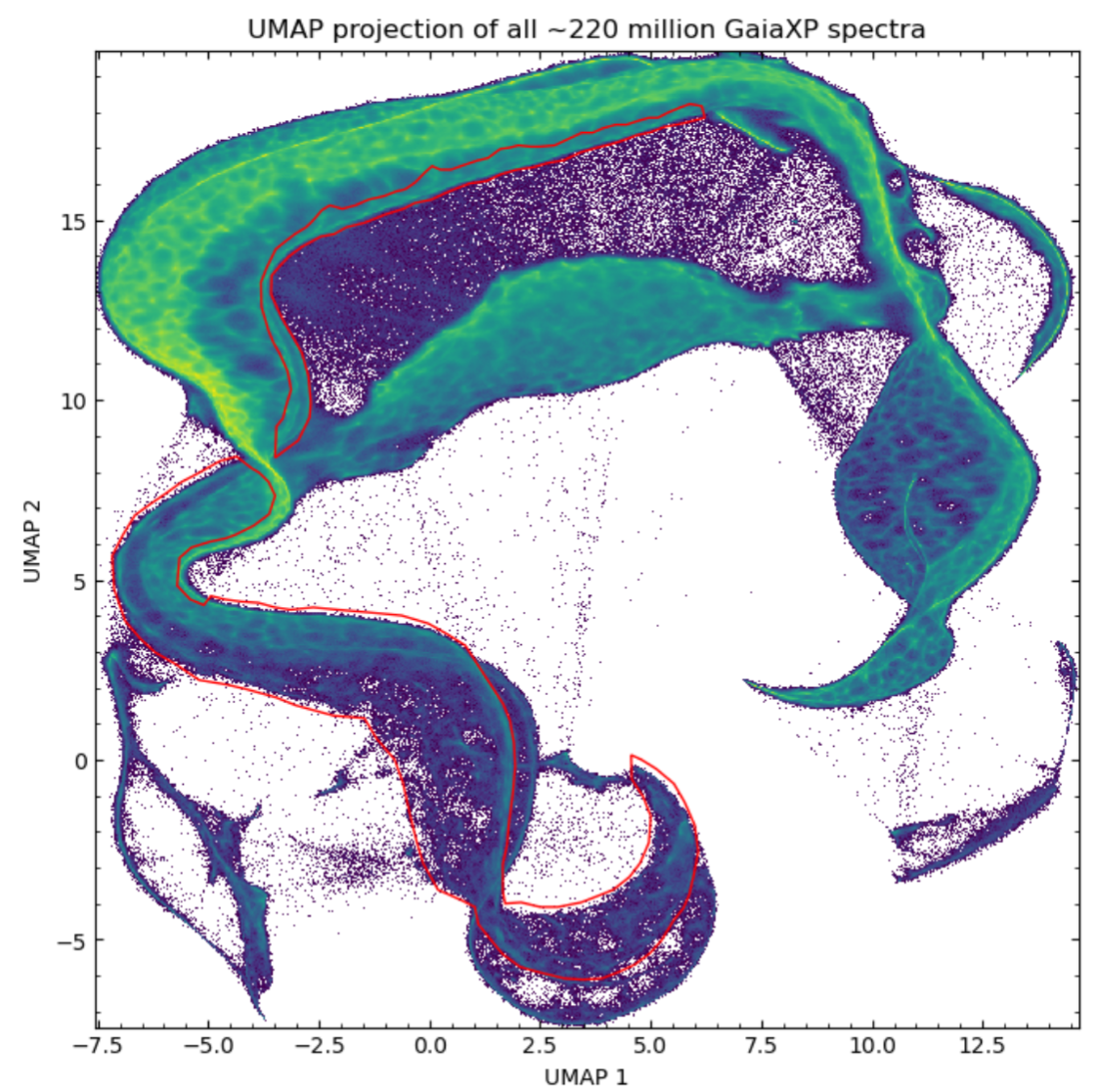
We used Gaia XP spectra to identify hot stars in the Milky Way and perform an analyis of the Milky Way structure. In total, we identified more than 6 million hot stars in the Milky Way using a UMAP embedding of the Gaia XP spectra.
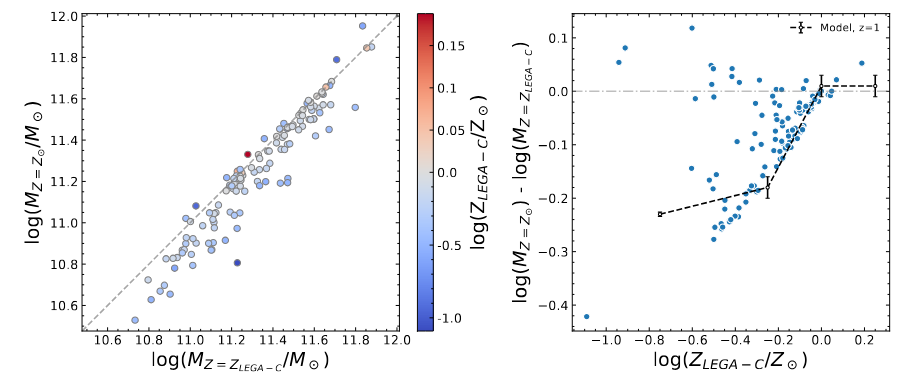
The Importance of Metallicity in Mass Estimates of Distant Quiescent Galaxies
Bachelor research project together with Tobias Eikelenboom at Leiden University. Supervised by Mariska Kriek.
We studied the effect of the solar metallicity assumption when estimating the mass of distant quiescent galaxies. Because it is very time-consuming to obtain spectra of a large number of distant galaxies, often only a SED (Spectral Energy Distribution) is available. It is hard to infer the metallicity of these galaxies from a SED, and often the solar metallicity assumption is used. We studied the effect of this assumption on the mass estimates of distant quiescent galaxies.
Education
- Astronomy & Data Science - Leiden University 2023-Present
- B.Sc. Astronomy - Leiden University, 2019-2023